
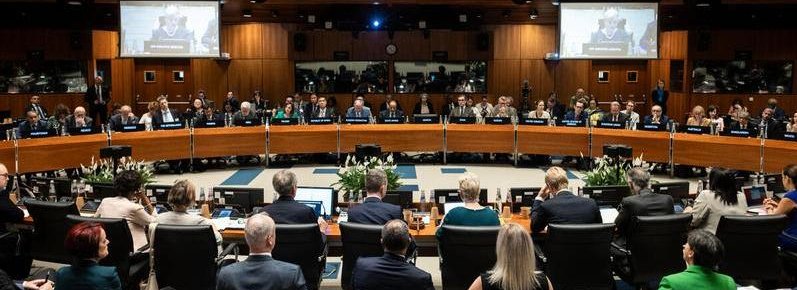
"Saving Lives – Changing Lives" – this is a core element of the work of the United Nations World Food Programme (WFP). Since July 2022, we have assumed the mandate to audit the world’s largest humanitarian organisation. Most recently, Kay Scheller, our President, presented first audit findings in Rome. "We strive to provide recommendations delivering genuine added value for WFP in its work for the poorest people in the world", said Kay Scheller, thus stating clearly what he expects from audit work.
President Kay Scheller provided an unqualified audit opinion for the WFP’s 2022 annual accounts and presented our audit findings to the member states at the annual session of the Executive Board in Rome. Following the presentation, the Executive Board could approve the annual financial statements and grant discharge to WFP Management.
27 recommendations in the financial audit and 30 recommendations in the two performance audits – this is our result from auditing WFP. Key recommendations covered the areas of contributions receivable, inventories, property, plant and equipment, staff costs and employee benefits, and accounting processes.
For example, we found that WFP had already recognised food commodities still stored at cooperating partners in the amount of $220 million as an expense. WFP should change its accounting policy of the expense recognition of food commodities handed over to cooperating partners and record these food commodities as inventories until they are distributed to beneficiaries.
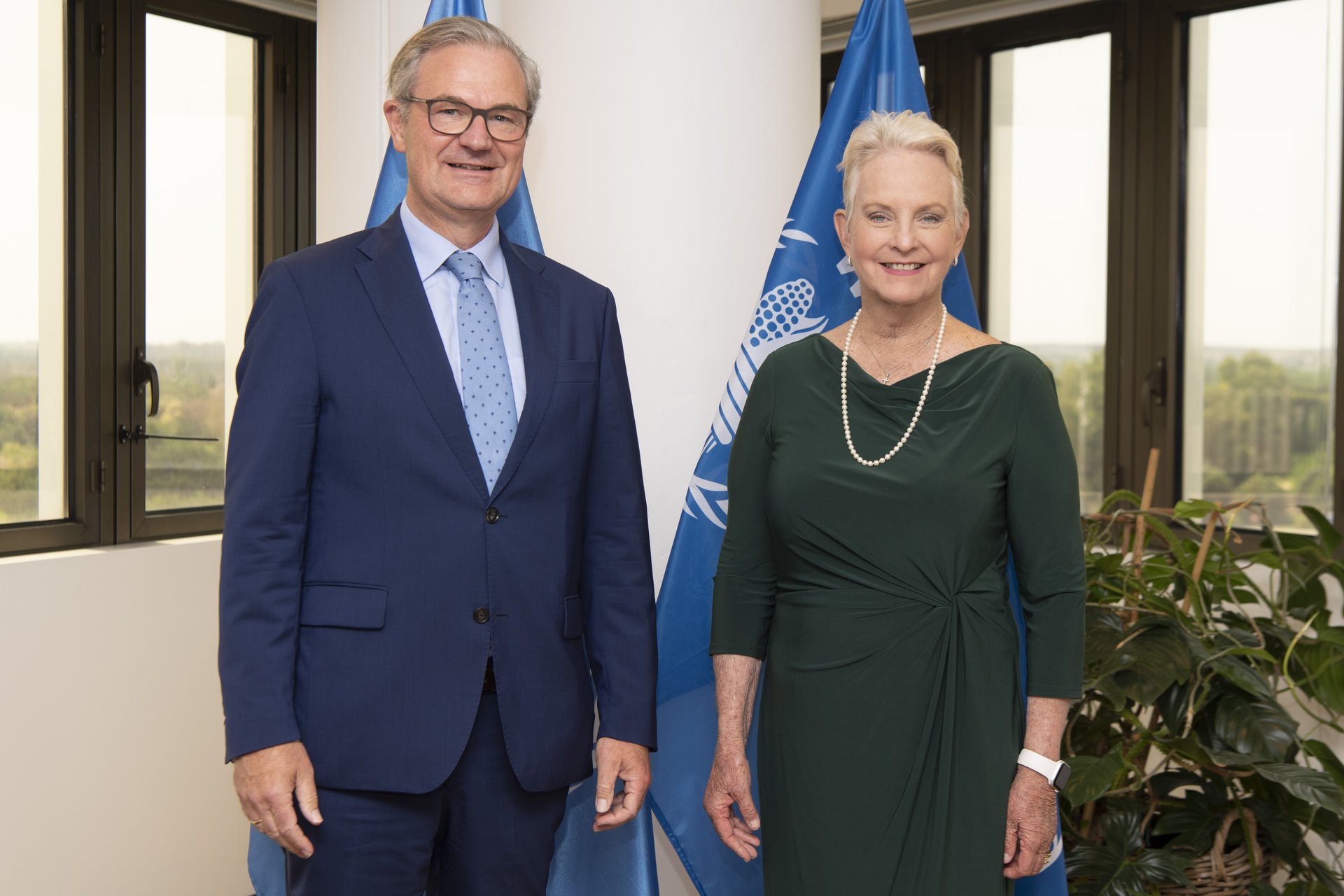
Kay Scheller, President of the Bundesrechnungshof, and Cindy Hensley McCain, Executive Director of the World Food Programme Source: WFP/Rein Skullerud.
Tough and challenging conditions on the ground
Most of the work to help people suffering from hunger is done on the ground in crisis regions, and this often under tough and challenging conditions. 20,000 staff members spread all over the world work in 123 countries and areas to provide hungry people with life-saving food assistance.
In order to take a close look at this work, our audit team conducted fieldwork: In addition to the audit activities carried out at the headquarters in Rome, our team visited the regional bureaux in Cairo and Johannesburg in the first audit cycle. Following the field visits to the regional bureaux, our team visited the country offices in Egypt, Jordan, Lebanon, Malawi, Mozambique and Tanzania and conducted a remote audit of the country office in Zimbabwe.
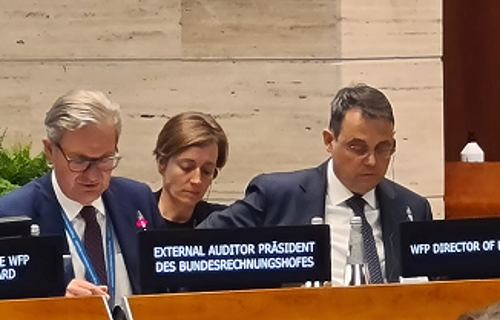
President Scheller presents the audit results at the Executive Board meeting. On the right in the picture: Lutz Hoffmann, Director of External Audit Source: Bundesrechnungshof/Marcel Dinkel.