
Jump to content
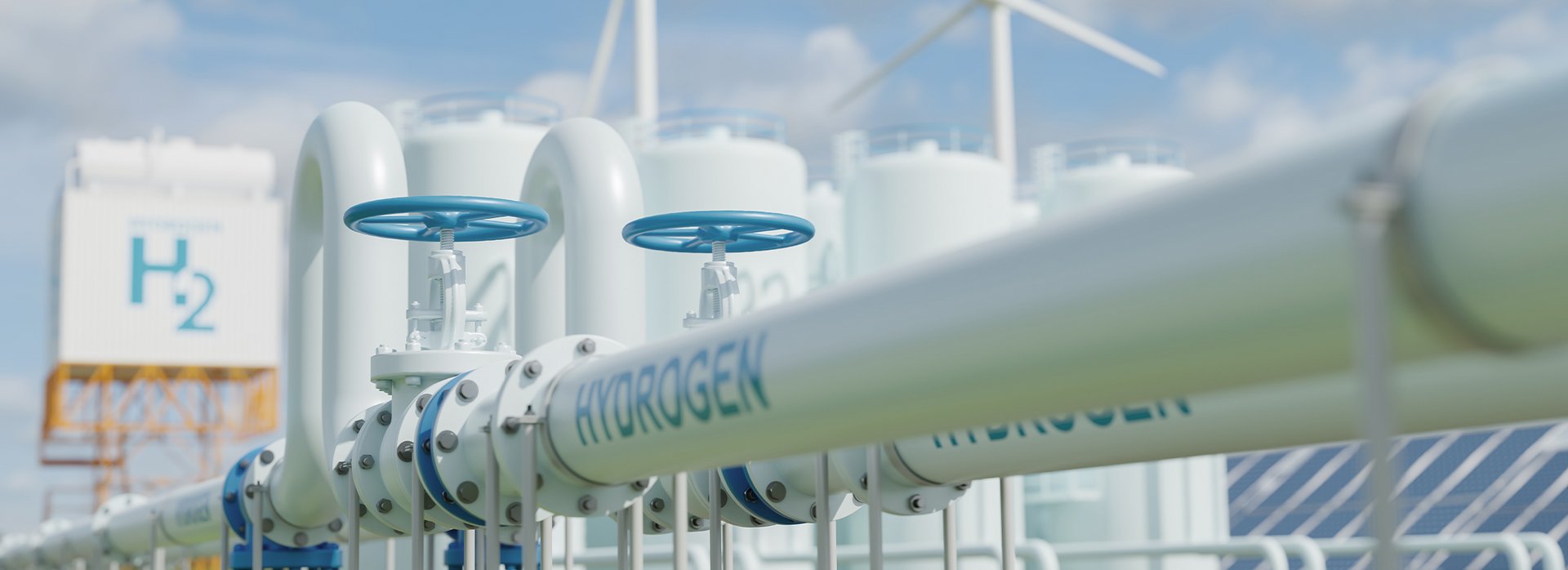
Das Bild zeigt eine Wasserstoffanlage.

National hydrogen strategy under
scrutiny

Implementation of the Federal Government's Hydrogen Strategy

Special report

Germany is supposed to become climate neutral by 2045. At the same time, Germany must remain competitive as an industrial nation – without fossil fuels. Hydrogen is to play a key role in this context. Our special report shows that, despite billions in subsidies, the success of the hydrogen economy remains uncertain.

In our latest special report, we address the inadequate implementation of the National Hydrogen Strategy, highlighting the associated risks for the energy transition, the economy and federal finances. We assess the extent to which the desired success of the hydrogen economy appears realistic.

Climate-neutral – "green" – hydrogen is to play a key role in the energy transition. According to the hydrogen strategy, it shall replace fossil fuels where the direct use of electricity from renewable energies is not possible. In addition, hydrogen-ready gas-fired power plants are to secure the electricity supply. Supply, demand and infrastructure must in its entirety be built up. The Federal Government provides billions of euros in annual funding to promote this ramp-up of the hydrogen economy.

Supply insufficient

Ensuring a secure provisioning of hydrogen depends on having enough supply. This is to be provided by domestic production and at least half through imports. However, neither domestic production nor the planned imports are feasible by 2030.

Demand remains very low

It is foreseeable that the necessary demand from the energy and industrial sectors will be lacking: for example, a key driver of demand is missing due to the lack of clear provisions for hydrogen-ready gas-fired power plants. Planned applications in the industry are being cancelled or delayed. At the same time, despite the foreseeable low utilisation, two-thirds of the hydrogen core network is to be ready as early as 2030.

Long-term burden on federal finances

The Federal Government is still far from reaching its goal of establishing a hydrogen economy by 2030.

Green hydrogen is likely to remain significantly more expensive than fossil fuels – and thus uncompetitive. This means that private investment is not being made. To compensate for the price differences, the Federal Government would have to provide billions in subsidies each year. Permanent government support is hence foreseeable – with considerable consequences for the stability of federal finances.

The financing mechanism chosen for the development of the hydrogen core network entails considerable financial risks for the Federal Government. If the ramp-up of the hydrogen economy is not successful, this could place an additional burden of tens of billions of euros on the federal budget.

Climate neutrality remains uncertain

In general, green hydrogen has the potential to be produced and used in a climate-neutral way. However, imports in particular can cause significant greenhouse gas emissions. In addition, the Federal Government had to make concessions on sustainability requirements to ensure that international producers were willing to supply green hydrogen. There is a risk that a sustainable supply of green hydrogen will not be achieved.

Reality check necessary

In general, the Federal Ministry for Economic Affairs and Energy has recognised the need for action. At the same time, it does not consider its own measures to be sufficient to offset the cost disadvantages of hydrogen in the foreseeable future.

The Federal Government must examine what contribution the hydrogen economy can realistically make to the energy transition. The ramp-up of supply, demand and infrastructure must go hand in hand. The government must not overstretch the federal budget.

Quelle: Bernhard Ehmann, Head of the Division of National economy, research, food safety, federal shareholdings, banking institutions, economic stabilisation at the Bundesrechnungshof
Bernhard Ehmann, Mitglied des des Bundesrechnungshofes.

We believe that the hydrogen strategy needs to be subjected to a reality check. To this end, the Federal Government must examine as to whether and when green hydrogen can be made available in sufficient quantities, at a competitive price and in a climate-neutral and sustainable manner.

If it cannot find solutions to the existing challenges, it will need a plan B in good time to achieve climate neutrality by 2045 without a permanently subsidised hydrogen economy.

Please read our special report to get more information on our recommendations:

Downloads

Special report

  • Implementation of the Federal Government's Hydrogen Strategy PDF, 4 MB Download
Cookies