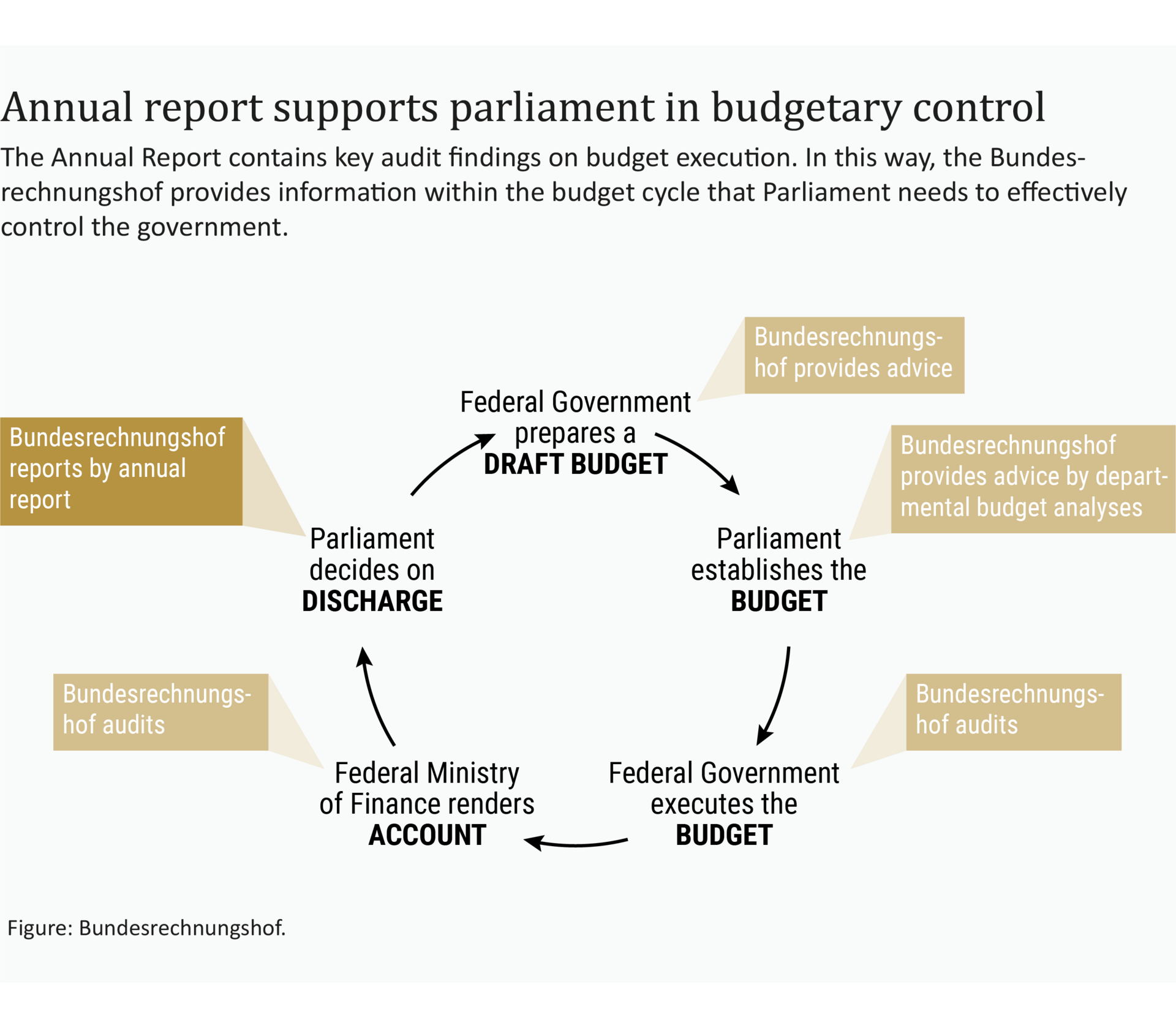


In December 2022, we presented our 2022 annual report. This annual report is now supplemented by a spring report. The spring report contains 18 reporting items including examples in which federal financial management was not targeted, inefficient and ineffective.
In particular in the area of climate action and on the path towards greater sustainability, the Federal Government needs to catch up. For example, the Federal Government has so far not reduced its office spaces in line with flexible forms of working. As a result, the Government spends millions of euros unnecessarily and emits gases which are harmful to the environment for operating and constructing its buildings (No. 22). When awarding grants to the federal states, the Federal Government also does not adequately ensure that these grants are linked with Germany’s Sustainable Development Strategy (No. 35). Furthermore, the Federal Government still lacks a procedure for measuring the effectiveness and efficiency of actions to tackle climate change (No. 23).
We also found shortcomings in information security. For example, the CIO Council fails to act despite significant shortcomings. On the contrary, the Council tolerated that the government departments had no longer provided relevant reports (No. 24). At the same time, comprehensive and complex specifications and lacking IT staff resulted in federal authorities having poorly or not at all implemented important security measures for many years (No. 25).
The Federal Government also does not meet the actual needs when supporting the federal states in the important improvement in all-day care for primary school pupils. Instead of being guided by the actual need of care places, the Federal Government provides support based on tax revenue and population (No. 33).
On the revenue side, the Federal Government should question extensive tax reliefs for classic cars (No. 36) and reform the aviation tax to avoid high losses in tax revenue (No. 37).